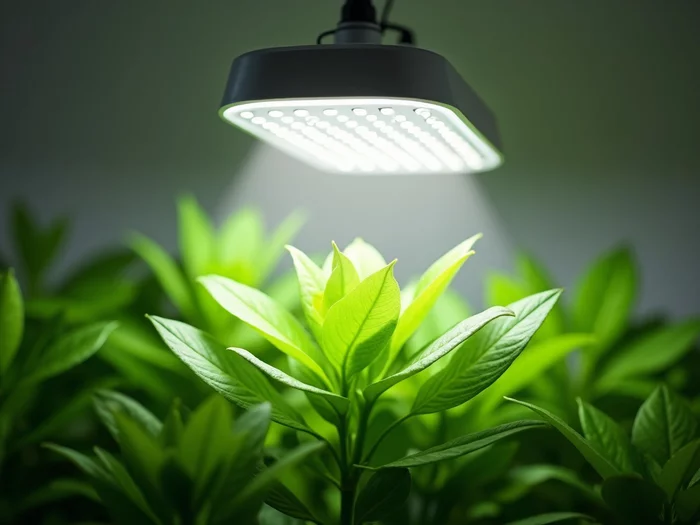
METRIC: Photosynthetic Photon Flux (PPF)
Measures total PAR emitted by a light source per second (µmol/s). Higher value = stronger light.
Posted on: 2025-10-12
By: Elena Cross
Have you ever wondered why your plants struggle to thrive indoors? Understanding grow light metrics might be the key to unlocking your indoor garden's full potential.
Understanding these essential terms and methods will help optimize your indoor garden's lighting.
The portion of the light spectrum (400-700 nm) plants use for photosynthesis. Essential for energy production.
Measures total PAR emitted by a light source per second (µmol/s). Higher value = stronger light.
Quantifies PAR reaching a specific area (µmol/m²/s). Crucial for optimal plant light reception.
Specialized sphere for precise PPF calculation across the PAR spectrum for reliable data.
Visualizes light distribution across the grow area to identify hotspots and ensure uniform light levels.
When diving into the world of indoor gardening, understanding grow light metrics is essential. With the right information, you can choose the perfect lighting to help your plants thrive. Let’s explore some key terms that will guide you in making informed decisions about your grow lights!
These terms may sound technical, but they are crucial for any hobby grower. By grasping these concepts, you’ll set yourself up for success in your indoor gardening journey.
Let’s break down these important terms so you can navigate the complexities of grow lights with confidence!
Photosynthetically Active Radiation (PAR) refers to the portion of the light spectrum that plants use for photosynthesis. This includes wavelengths from 400 to 700 nanometers, which are vital for plant growth. Without proper PAR, your plants may struggle to produce energy effectively. Have you noticed your plants looking a bit lackluster? It might be time to check your light's PAR output! For more detailed information on light spectra and plant growth, you can refer to resources from the U.S. Department of Energy.
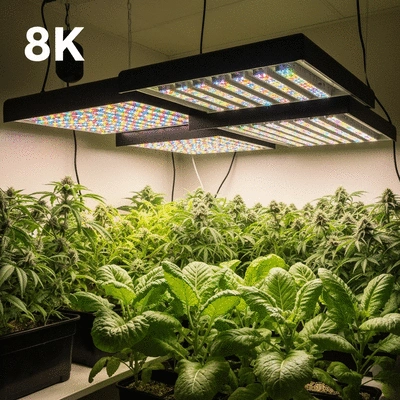
Photosynthetic Photon Flux (PPF) measures the total amount of PAR emitted by a light source per second. This is typically expressed in micromoles per second (µmol/s). A higher PPF value indicates a stronger light source, which can help your plants grow faster. When shopping for grow lights, don’t just focus on wattage; pay attention to the PPF ratings instead!
Photosynthetic Photon Flux Density (PPFD) quantifies the amount of PAR that actually reaches a specific area (usually measured in micromoles per square meter per second, or µmol/m²/s). This metric helps you understand how well your plants are receiving light. It’s essential to aim for the right PPFD levels for your plant species, especially during different growth stages. To further your understanding of grow light measurements like PPFD and spectrum, LEDs Magazine offers valuable insights.
Now that we’ve covered the basics, let’s talk about how to measure the performance of your grow lights. Accurate measurements can help you optimize your indoor garden setup!
With these measurement techniques, you’ll have a clearer picture of how effective your grow lights are and how they can benefit your plants.
To get the most out of your grow lights, measuring PPF and PPFD accurately is crucial. Let’s explore some effective techniques!
Sphere tests involve using a specialized sphere to calculate the PPF emitted by a grow light. This method provides a precise measurement of how well your light performs across the PAR spectrum. For best results, I recommend using a high-quality integrating sphere, as it will give you the most reliable data to inform your lighting choices.
PPFD mapping helps visualize how light is distributed across your grow area. By taking measurements at various points, you can identify hotspots and areas that may need additional lighting. This approach is invaluable for achieving uniform light levels, ensuring all your plants receive the energy they need to thrive!
Investing in the right tools will greatly enhance your ability to assess and optimize your grow lights. Here are some must-have measuring tools!
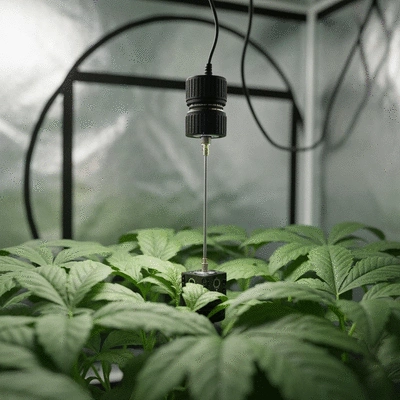
A quantum sensor is an excellent tool specifically designed to measure PAR. It provides accurate readings of the light intensity your plants are receiving. With this information, you can make informed adjustments to your lighting to keep your indoor garden flourishing!
Light meters are versatile tools that allow you to measure various light metrics, including PPFD. They come in handy for assessing light levels at different heights and distances from your plants. By using a light meter, you can ensure that your light setup remains effective throughout the growth cycle! For more insights into measuring light for indoor plant growth, Penn State Extension provides valuable information.
While PAR, PPF, and PPFD are all important, PPFD (Photosynthetic Photon Flux Density) is often considered the most crucial for optimizing plant growth. It tells you exactly how much usable light is reaching your plants in a specific area, allowing for precise adjustments.
The ideal PPFD level varies significantly depending on the plant species and its current growth stage. Seedlings and leafy greens require lower PPFD, while flowering plants often need much higher levels. Researching the specific light requirements for your plants is key.
Yes, excessive light can lead to light stress, nutrient deficiencies, and even bleaching or burning of plant leaves. It's important to find the right balance and avoid exposing plants to excessively high PPFD levels, especially for extended periods.
PPF (Photosynthetic Photon Flux) measures the total light output of a grow light fixture, indicating its overall strength. PPFD (Photosynthetic Photon Flux Density) measures the amount of light that actually hits a specific surface area where your plants are located. PPFD is more relevant for growers as it reflects the light plants receive.
No, they are different tools. A quantum sensor is specifically designed to measure PAR (Photosynthetically Active Radiation), which is the light spectrum plants use for photosynthesis, providing accurate PPFD readings. While some light meters can measure general light intensity, a quantum sensor provides more precise data for grow light optimization.
What do you think about the importance of understanding grow light metrics in your indoor gardening journey? Share your thoughts below:
As we wrap up our discussion on grow light metrics, it’s clear that understanding terms like PPFD, PAR, and PPF is crucial for every indoor gardener. Whether you're just starting or have years of experience, these metrics help you make informed decisions that can significantly enhance your indoor gardening experience. Remember, the right light setup can be the difference between a flourishing garden and a struggling one!
To keep everything straightforward, here are the key takeaways:
Understanding these metrics allows you to tailor your lighting to suit your plants' needs. With the right knowledge, you can enhance growth and maximize your harvest!
When it comes to selecting the right grow light, a few practical steps can streamline the process. I know firsthand how overwhelming it can be to choose from the myriad of options available in the market. Here’s a quick checklist to help you out:
By following these steps, you can select a grow light that not only meets your plants' needs but also fits your budget and space. Remember, investing in the right lighting is an investment in the health and productivity of your indoor garden!
I’d love to hear about your experiences with grow lights! Have you faced challenges or found specific lights that have worked wonders for your plants? Sharing your stories can help foster a sense of community among indoor gardening enthusiasts like us.
As an avid indoor gardener, I understand that navigating the world of grow lights can be tricky. If you have questions or need clarification on any of the topics we've discussed, feel free to reach out! Your feedback is invaluable, and together, we can help each other grow (pun intended!).
For those eager to dive deeper into the world of grow lights and metrics, I recommend checking out resources like:
These resources are fantastic for expanding your knowledge and keeping you updated on the latest trends in indoor gardening. Let’s continue to learn and grow together!
Here is a quick recap of the important points discussed in the article: