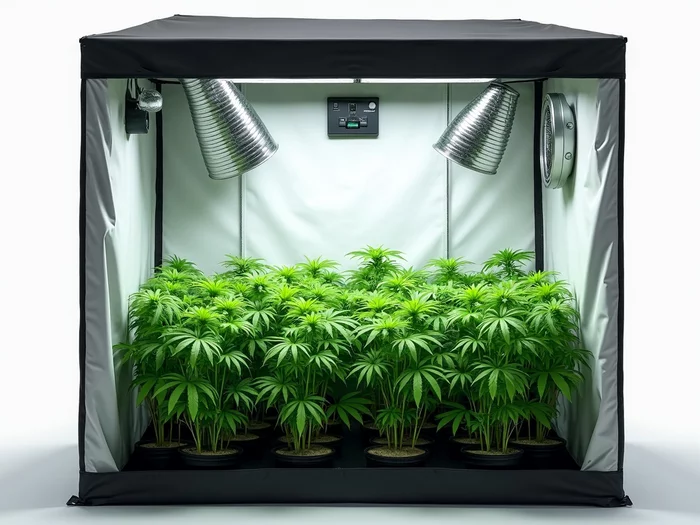
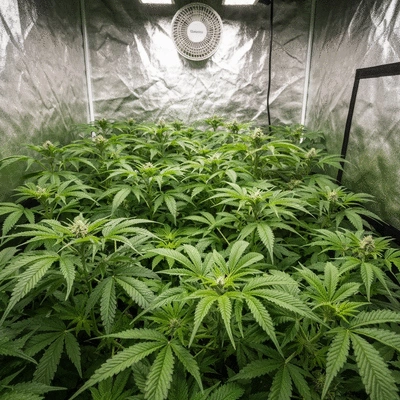
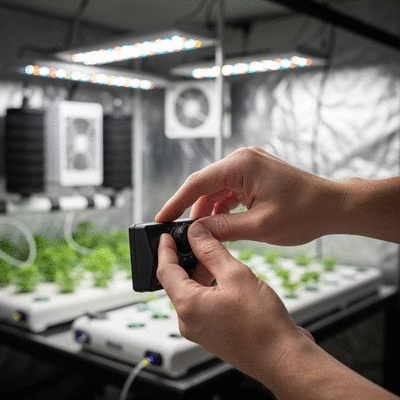
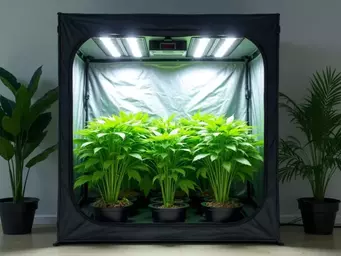
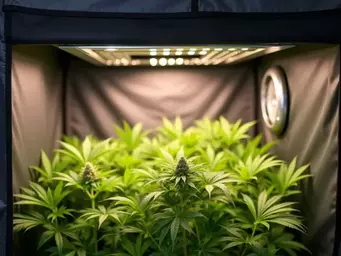
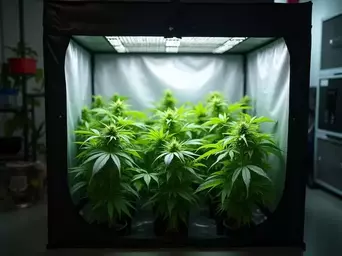
Have you ever considered how airflow can make or break your indoor garden? Understanding this vital aspect can enhance your plants' health and growth like never before.
What You Will Learn
Ventilation is essential for maintaining healthy plants by reducing humidity and preventing mold and mildew.
Effective airflow enhances nutrient uptake and balances temperature, crucial for plant growth.
Monitoring CO2 levels is vital; inadequate airflow can lead to decreased growth rates.
Proper placement of exhaust and circulation fans can significantly improve airflow efficiency in grow tents.
Understanding passive and active intake systems can help tailor airflow solutions to your specific gardening needs.
Regular maintenance of fans and filters is necessary to prevent airflow issues and ensure optimal growing conditions.
Effective airflow is crucial for healthy plant growth in indoor grow tents. The visual below outlines the essential components for optimizing airflow and common issues to troubleshoot, ensuring a thriving garden environment.
Airflow's Role in Plant Health
✓ Reduces humidity, prevents mold
✓ Enhances nutrient uptake
✓ Balances temperature, CO2
Key Components
●Exhaust Fans: Top/near lights
●Intake Systems: Passive/Active
●Ducting: Smooth-walled, short runs
●Circulation Fans: Oscillating, at plant level
●Carbon Filters: Near exhaust, regular maintenance
Troubleshooting Airflow Issues
⚠Noise & Vibration: Use isolators, secure mounting
⚠Heat Stress: Efficient exhaust, oscillating fans, monitor temps
⚠Low CO2: Ensure fresh air inflow, consider CO2 systems
Understanding the Importance of Airflow in Grow Tents
When it comes to indoor gardening, airflow is one of those factors that can’t be overlooked. I can’t tell you how many times I’ve seen plants thrive or struggle based on their environment. Proper ventilation plays a critical role in maintaining healthy plants and ensuring they grow to their full potential!
So, what’s the big deal about airflow? Well, let’s dive into the essential aspects of ventilation and see how it connects to plant health and growth.
The Role of Ventilation in Plant Health and Growth
Ventilation is like the lungs of your grow tent! It allows fresh air to circulate while removing stale air that can harbor unwanted pests and diseases. Proper airflow helps in several ways:
Reduces humidity levels, preventing mold and mildew.
Enhances nutrient uptake by keeping plants healthy and strong.
Balances temperature, ensuring a comfortable climate for your plants.
Without adequate ventilation, your plants could suffer from stress and poor growth. I’ve seen firsthand how establishing a good airflow system can transform a struggling garden into a thriving oasis! For more insights into setting up effective ventilation, explore this guide on grow tent ventilation.
How Airflow Affects Temperature and Humidity Control
Temperature and humidity are crucial for your indoor garden's success. When air circulates effectively, it helps maintain the right levels of both, which is essential for photosynthesis. If it gets too hot or humid, plants can become stressed, leading to stunted growth or even plant death.
Keep an eye on temperature shifts to adjust your systems accordingly.
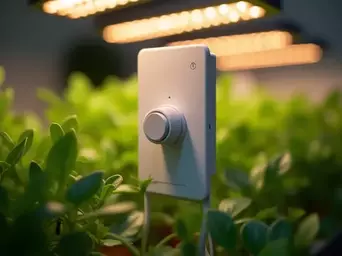
Use hygrometers to monitor humidity levels and make changes as needed.
Invest in fans and vents that help stabilize your grow tent’s environment.
As someone who has experimented with various setups, I can assure you that finding the right balance is key to a flourishing garden experience!
Impact of CO2 Levels on Plant Growth Rates
Did you know that carbon dioxide (CO2) is a vital component of photosynthesis? Proper airflow not only clears out excess heat and moisture but also ensures that your plants receive enough CO2 to grow optimally. In a closed environment, CO2 levels can drop, leading to slow growth.
Consider integrating CO2 delivery systems for larger gardens.
Monitor CO2 levels regularly to keep track of your plants’ needs.
Utilize exhaust systems that maintain fresh air inflow while removing stale air.
By understanding and managing CO2 levels, you can significantly enhance your plants’ growth rates, helping you maximize your indoor gardening efforts!
Key Components for Optimizing Grow Tent Airflow
Once you grasp the importance of airflow, it’s time to focus on the components that make it happen. These elements are essential in creating an effective system that supports your plants' needs.
Exhaust Fan Placement: Maximizing Efficiency
Proper placement of exhaust fans is vital for efficient airflow. The location will determine how effectively stale air is removed from your grow tent.
Choose high points in the tent for exhaust fan installation to remove hot air.
Ensure the fan is near the heat source for maximum effectiveness.
Keep the exhaust vent clear of obstructions for optimal airflow.
In my experience, a well-placed exhaust fan can make all the difference in maintaining the desired atmosphere for your plants!
Optimal Locations for Exhaust Fans to Remove Stale Air
Here are some optimal locations for installing your exhaust fans:
Near the top of the tent—hot air rises!
Close to the light source to keep temperatures down.
Positioned opposite the intake fans to create a balanced airflow.
These strategic placements can help ensure that your plants receive the best possible air quality!
Using Inline Duct Fans for Enhanced Airflow
Inline duct fans can be a game-changer for your grow tent setup! They offer flexibility and power in maintaining airflow throughout the space.
Install them in ducting paths to boost efficiency.
Look for quiet models to minimize noise disturbances.
Consider their power rating to match your tent’s size and needs.
Incorporating inline fans into your system can enhance your garden’s overall health and yield!
Understanding Passive and Active Intake Systems
To achieve the best airflow, understanding the difference between passive and active intake systems is essential. Each has its own benefits and can be tailored to your specific gardening needs.
Differences Between Passive and Active Intake
Here's a quick breakdown:
Passive Intake: Utilizes vents to draw in air naturally.
Active Intake: Involves fans to force air into the grow tent.
Choosing the right system will depend on your tent size, plant type, and environmental conditions! For a detailed comparison of ventilation options, you can refer to this resource on optimizing grow room airflow.
Best Practices for Installing Intake Fans
If you opt for an active intake system, consider these tips:
Install the fan near the tent entrance for maximum air intake.
Ensure the fan size matches the exhaust capacity for balance.
Regularly check for dust accumulation in the intake area.
These practices can help maintain a steady flow of fresh air, optimizing your indoor gardening experience!
Choosing the Right Ducting for Grow Tents
The type of ducting you use can drastically affect airflow efficiency. Choosing the right equipment can minimize airflow resistance and ensure a steady supply of fresh air.
Best Ducting Setup for Minimizing Airflow Resistance
To create an efficient ducting setup, keep these points in mind:
Use smooth-walled ducting to reduce friction.
Short duct lengths help maintain airflow pressure.
Avoid sharp bends that can disrupt airflow dynamics.
In my experience, investing in quality ducting pays off in the long run, leading to better plant health!
Tips for Short, Straight Duct Runs and Smooth Bends
Here are some practical tips for your ducting setup:
Plan your duct layout to keep runs as short and straight as possible.
Invest in flexible ducting that can accommodate gentle curves.
Use duct tape to secure connections and prevent leaks.
These strategies can significantly enhance your system's performance!
Enhancing Airflow with Circulation Fans and Filters
Circulation fans and filters are essential in maintaining a well-ventilated grow tent. They help distribute air evenly while ensuring that odors and contaminants are kept at bay.
Placement of Circulation Fans for Optimal Air Distribution
The right placement of circulation fans can improve air distribution throughout your grow tent and promote healthy plant growth.
Using Oscillating Fans Inside Grow Tents
Oscillating fans can be a fantastic addition to your grow tent setup:
Position them at plant level to create a gentle breeze.
Ensure they cover the entire area by oscillating back and forth.
Keep fans at a distance to avoid stressing plants with strong winds.
By incorporating oscillating fans, you can mimic natural outdoor conditions, which is invaluable for plant health!
Benefits of Fan Speed Controllers for Customization
Fan speed controllers allow for a customized airflow experience:
Adjust speeds based on plant stages—young plants need less wind!
Fine-tune airflow as environmental conditions change.
Reduce energy consumption with efficient settings.
As someone who prioritizes flexibility in my grow tent, I can attest to the benefits of fan speed controllers!
Carbon Filters and Odor Control in Your Grow Tent
Odors can be a significant concern for indoor gardeners, and carbon filters are an effective solution. They help maintain fresh air quality while minimizing unwanted smells.
How to Install Carbon Filters Effectively
Installing carbon filters can be straightforward if you follow these tips:
Position filters near the exhaust fan to maximize effectiveness.
Make sure the filter fits securely to prevent air leaks.
Regularly check and replace filters as needed to maintain performance.
By effectively managing odors, you’ll create a more pleasant indoor gardening experience!
Integrating Carbon Filters with Exhaust Systems
Seamless integration is key to effective odor control:
Connect the carbon filter directly to your exhaust system.
Ensure that airflow direction is consistent with the filter’s design.
Check for compatibility with your existing fan setup.
This integration makes sure that your grow tent stays fresh and inviting!
Maintaining Air Quality through Regular Filter Maintenance
Regular maintenance is essential for keeping your air quality in check:
Schedule filter checks every month to assess performance.
Clean any pre-filters to extend the life of your carbon filter.
Replace filters according to manufacturer recommendations.
By staying on top of maintenance, you’ll ensure a healthier environment for your plants!
Pro Tip
Did you know that regularly monitoring your grow tent's airflow can prevent many common issues? Invest in a quality hygrometer and thermometer to keep track of humidity and temperature levels. Maintaining optimal conditions can significantly enhance your plants' health and growth rates, ensuring a lush indoor garden!
Troubleshooting Common Airflow Issues in Grow Tents
Even with the best setup, you might encounter some airflow issues in your grow tent. Don't worry, it's quite common, and I'm here to help you troubleshoot these challenges! Let’s tackle the most frequent problems and how to resolve them.
Noise and vibration issues
Filter clogging and maintenance
Heat stress management
With the right solutions, you can create a harmonious growing environment that promotes healthy plant growth. Let’s get started!
Addressing Noise and Vibration Problems
Noise from fans and equipment can be quite bothersome, especially if your grow tent is in a shared space. Vibration issues can cause premature wear on your equipment too. To minimize these disturbances, consider the following:
Use rubber isolators or pads under your fans to absorb vibrations.
Ensure all equipment is securely mounted and free from wobbling.
Opt for quieter fan models that are designed for grow tents.
Implementing these tips can significantly reduce noise levels, making your indoor gardening experience much more enjoyable!
Solutions for Filter Clogging and Maintenance
Carbon filters play a crucial role in maintaining the air quality inside your grow tent. However, they can become clogged over time, leading to reduced airflow. Here’s how to keep them in top condition:
Regularly check and clean your filters, ideally every few weeks.
Replace filters as recommended by the manufacturer, typically every 6-12 months.
Use pre-filters to catch larger particles and extend the life of your carbon filter.
By staying on top of filter maintenance, you can keep your airflow strong and your plants healthy. Trust me, it’s a small effort that leads to big rewards!
Managing Heat Stress through Effective Airflow
Heat stress can be a significant problem in grow tents, especially during warmer months. Proper airflow is essential to keep temperatures in check. Here are some strategies I've found effective:
Ensure your exhaust fans are set to remove hot air effectively.
Use oscillating fans to circulate air and create a more even temperature throughout the tent.
Monitor temperature levels regularly with a thermometer or an environmental controller.
By implementing these techniques, you can prevent heat stress and help your plants thrive in a comfortable environment. Remember, keeping your plants happy is key to your indoor gardening success! Understanding concepts like negative pressure in grow tents can further assist in managing your environment effectively.
Frequently Asked Questions About Grow Tent Airflow
Here are some common questions about optimizing airflow in grow tents to help you ensure a thriving indoor garden.
Q: Why is airflow so important in a grow tent?
A: Airflow is crucial for reducing humidity, preventing mold and mildew, enhancing nutrient uptake, and balancing temperature and CO2 levels. Without proper airflow, plants can suffer from stress and slow growth.
Q: How do I control temperature and humidity in my grow tent?
A: Effective airflow helps maintain optimal temperature and humidity. Use exhaust fans to remove hot, stale air and intake fans to bring in fresh air. Monitor levels with hygrometers and thermometers, and use oscillating fans for even air distribution.
Q: What is the ideal placement for exhaust fans?
A: Exhaust fans should be placed at high points in the tent, preferably near the light source, as hot air rises. Positioning them opposite intake fans helps create balanced airflow.
Q: What is the difference between passive and active intake systems?
A: Passive intake systems rely on natural air pressure differences to draw air through vents. Active intake systems use fans to force fresh air into the grow tent, providing more control over airflow.
Q: How often should I clean or replace my carbon filter?
A: Carbon filters should be checked and cleaned every few weeks, and typically replaced every 6-12 months, depending on usage and manufacturer recommendations. Regular maintenance, including cleaning pre-filters, helps extend their life and maintain air quality.
Q: How can I reduce noise and vibration from my grow tent fans?
A: To reduce noise and vibration, use rubber isolators or pads under fans, ensure all equipment is securely mounted, and consider investing in quieter fan models designed for grow tents.
Recap of Key Points
Here is a quick recap of the important points discussed in the article:
Proper ventilation is critical for maintaining healthy plants and promoting growth.
Monitor temperature and humidity levels to prevent plant stress and improve photosynthesis.
Utilize CO2 delivery systems and monitor CO2 levels for optimal plant growth rates.
Strategically place exhaust and intake fans to maximize airflow efficiency.
Choose quality ducting to minimize airflow resistance and ensure steady air supply.
Incorporate circulation fans to evenly distribute air and enhance plant health.
Regularly maintain carbon filters to manage odors and maintain air quality.
Troubleshoot common airflow issues to create a harmonious growing environment.
2025-10-10
Budget Grow Lights Under $200
When investing in indoor gardening, many overlook the importance of choosing the right grow lights.
2025-10-12
Setting Up Your First Grow Tent
Choosing to dive into indoor gardening can be a rewarding experience, but are you equipped with the
2025-10-12
Install Exhaust Fan in Grow Tent
Did you know that proper ventilation can significantly enhance the growth of your indoor plants? In